
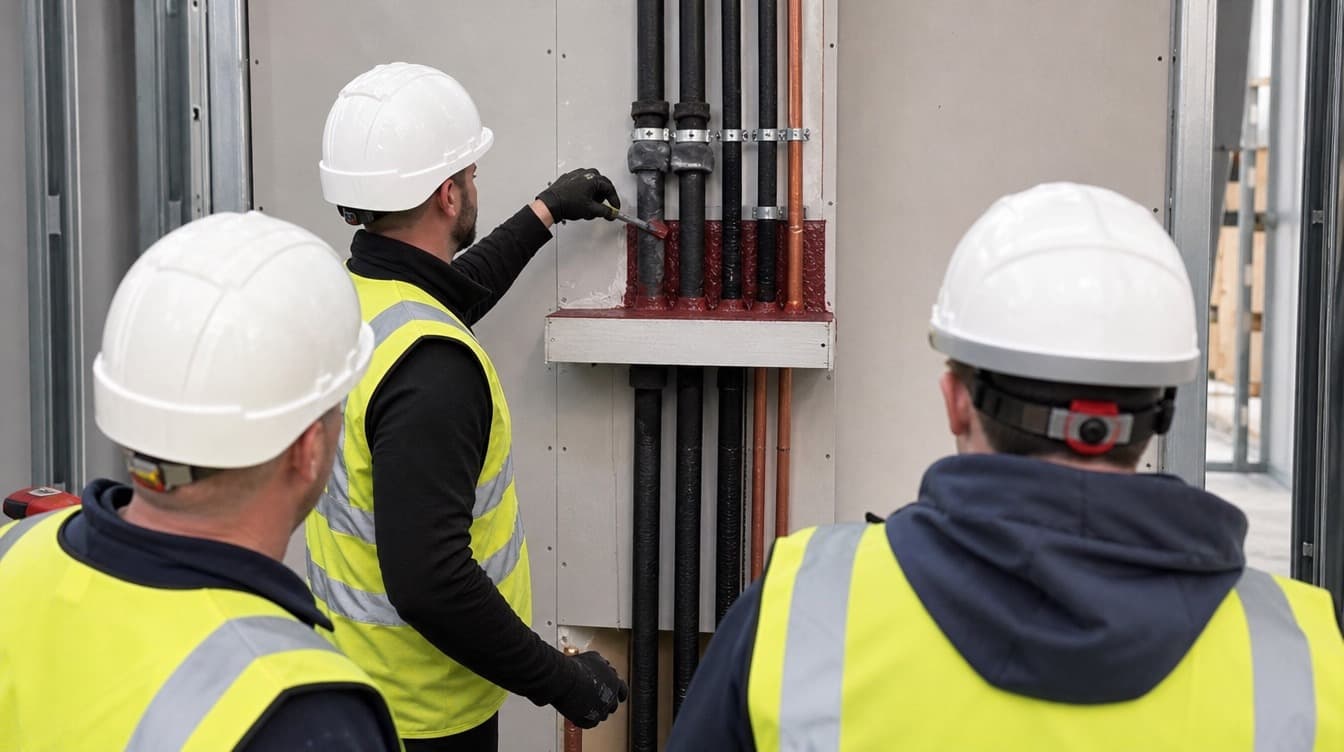
Fire Safety Training Programs for Professionals
October 9, 2023
How to structure fire safety training for site teams to ensure compliant installations.
Training Programs for Fire Safety
Building Competence, Confidence and Compliance Across Construction
Fire safety training is a critical component of effective risk management in the construction and built environment sectors. Regulations, materials, and construction methods continue to evolve, and without proper training, even well-designed fire safety measures can be compromised.
Investing in structured fire safety training ensures that everyone involved – from site operatives to supervisors and duty-holders – understands their responsibilities and has the knowledge and skills to implement fire safety correctly.
Why Fire Safety Training Matters
Fire safety is not achieved through systems and products alone. It relies heavily on the competence of the people installing, managing and maintaining them.
Effective fire safety training:
Reduces the risk of fire-related incidents on site
Improves compliance with fire safety legislation and standards
Minimises installation errors and unsafe practices
Supports accountability and demonstrable competence
Protects lives, property and project timelines
In a regulatory environment that increasingly emphasises competence, training is no longer optional – it is essential.
Types of Fire Safety Training Programs
Fire safety training can take many forms depending on role, responsibility and project requirements. The most effective approach often combines multiple training methods.
Online Fire Safety Courses
Online training provides a flexible and accessible way to build foundational knowledge and maintain ongoing awareness.
Common topics covered include:
Fire safety legislation and duties
Principles of fire prevention and fire behaviour
Roles and responsibilities on construction sites
Basic understanding of fire protection systems
Online courses are particularly effective for:
Induction and refresher training
Reaching large or geographically dispersed teams
Demonstrating baseline competence through recorded completion
While online training cannot replace practical experience, it provides a strong theoretical foundation.
In-Person Workshops and Practical Training
In-person training allows for hands-on learning and direct engagement with real-world scenarios.
These sessions typically cover:
Correct installation of fire stopping systems
Fire door awareness and inspection basics
Identifying common site defects and non-compliances
Emergency procedures and evacuation protocols
Practical workshops are especially valuable for:
Site operatives and supervisors
Quality control and inspection teams
Reinforcing best practice and reducing workmanship errors
Face-to-face training also enables questions, discussion and immediate feedback – all critical for improving competence.
Certification and Accredited Training Programs
Certification programs provide formal recognition of competence and are increasingly required by clients, regulators and insurers.
These programs may include:
Passive fire protection installer certifications
Fire door inspection qualifications
Fire risk assessment training
Manufacturer-approved system training
Certified training:
Demonstrates verified competence
Supports compliance with modern building safety regimes
Provides assurance to duty-holders and stakeholders
Maintaining certification often requires periodic reassessment, ensuring knowledge remains current.
Matching Training to Roles and Responsibilities
Not all personnel require the same level of fire safety training. An effective strategy aligns training depth with responsibility.
For example:
Site operatives benefit from practical, task-specific training
Supervisors require broader awareness and inspection skills
Project managers need understanding of compliance, documentation and coordination
Duty-holders must understand legal obligations and accountability
Targeted training ensures efficiency while maintaining high safety standards.
The Long-Term Value of Investing in Training
Fire safety training delivers long-term benefits beyond immediate compliance.
These include:
Fewer defects and remedial works
Improved audit and inspection outcomes
Stronger safety culture across projects
Reduced project delays caused by non-compliance
Clear evidence of competence and due diligence
In many cases, the cost of training is far lower than the cost of rectifying fire safety failures later.
How DefendX Supports Fire Safety Competence
At DefendX, we recognise that robust fire safety relies on both quality systems and competent people.
Our approach supports training and competence through:
Clear, standardised installation methodologies
Evidence-based documentation that reinforces correct practice
Collaboration with certified installers and inspectors
Digital records that support learning, auditing and accountability
By aligning training with practical delivery and documentation, we help ensure fire safety measures are installed, inspected and maintained correctly.
Conclusion
Fire safety training is a fundamental investment in safer construction and compliant buildings. Through a combination of online learning, practical workshops and accredited certification, organisations can equip their teams with the knowledge and skills required to manage fire safety effectively.
In an industry where competence and accountability are under increasing scrutiny, structured fire safety training provides confidence, clarity and protection.
DefendX – Supporting safer buildings through intelligent fire safety solutions and a commitment to competence.