
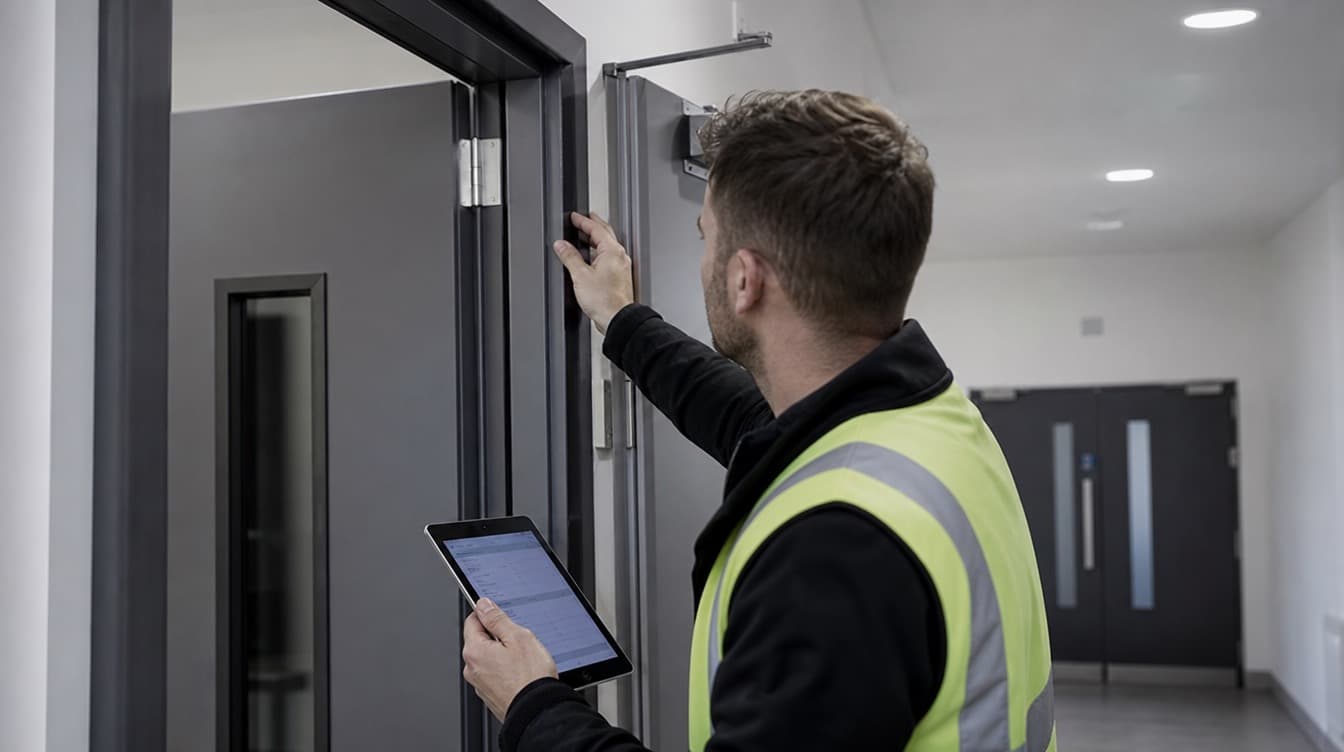
Fire Door Supply and Maintenance Schedules
October 5, 2023
Technical specifications and maintenance intervals for certified fire door systems.
Understanding Fire Door Compliance Standards
Essential Guidelines for Maintaining Fire Safety Integrity
Fire doors are not just ordinary doors; they are critical components of a building's passive fire protection system. Their correct specification, installation, and maintenance are paramount to safeguarding lives and property. In the UK, understanding and adhering to fire door compliance standards is not merely a recommendation—it's a legal and ethical imperative.
At DefendX Fire Protection, part of the DefendX Onsite Group, we specialise in ensuring fire doors perform their life-saving function. This article provides essential guidelines for maintaining fire safety integrity, aimed at main contractors, facilities managers, building owners, and anyone responsible for fire safety in commercial, industrial, or residential properties.
The Critical Role of Fire Doors
Fire doors serve two primary functions in a fire event:
Containment: They prevent the spread of fire and smoke from one compartment to another for a specified period (e.g., 30, 60, 90, or 120 minutes). This containment allows occupants more time to evacuate safely.
Protection of Escape Routes: They protect designated escape routes, such as corridors and stairwells, ensuring they remain clear of fire and smoke for long enough to allow safe egress.
Without compliant fire doors, the integrity of a building's fire compartments is compromised, potentially leading to rapid fire spread and catastrophic consequences.
Key Fire Door Compliance Standards in the UK
Adhering to the following standards and regulations is fundamental to fire door compliance:
1. Building Regulations Approved Document B (Fire Safety)
This document sets out the functional requirements for fire safety in buildings in England and Wales. It dictates where fire doors are required, their minimum fire resistance periods (FD30, FD60, etc.), and their performance characteristics. Similar regulations apply in Scotland and Northern Ireland.
2. BS 8214:2016 – Code of Practice for Fire Door Assemblies
This British Standard provides recommendations for the specification, installation, and maintenance of timber-based fire door assemblies. It covers everything from the door leaf and frame to essential hardware like hinges, closers, and intumescent seals.
3. BS 9999:2017 – Code of Practice for Fire Safety in the Design, Management and Use of Buildings
This comprehensive standard offers guidance on fire safety in the design, management, and use of buildings. It includes recommendations for fire doors, their performance, and how they integrate into the overall fire safety strategy.
4. BS EN 1634 Series – Fire Resistance and Smoke Control Tests
These European Standards specify the methods for determining the fire resistance and smoke control performance of door and shutter assemblies, openable windows, and elements of building hardware. Fire doors must be tested to these standards to achieve their stated fire rating.
5. Regulatory Reform (Fire Safety) Order 2005 (RRO)
This legislation places a legal duty on the "responsible person" (e.g., building owner, employer, facilities manager) to ensure the safety of occupants from fire. This includes maintaining fire doors in an effective state and ensuring they are fit for purpose.
Essential Guidelines for Maintaining Fire Safety Integrity
Achieving and maintaining fire door compliance requires a proactive and systematic approach throughout the door's lifecycle.
1. Correct Specification and Procurement
Certified Door Sets: Always specify and procure complete fire door sets (door leaf, frame, and all hardware) that have been tested and certified together. Mixing and matching components from different manufacturers can invalidate the fire rating.
Third-Party Certification: Look for products from manufacturers who are part of recognised third-party certification schemes (e.g., BWF-CERTIFIRE, BM TRADA Q-Mark). This provides independent assurance of performance.
Appropriate Rating: Ensure the fire rating (e.g., FD30, FD60) and smoke control (e.g., S or Sa) are appropriate for the specific location and fire strategy requirements.
Key takeaway: A fire door is a system, not just a slab of wood. Every component matters.
2. Precision Installation
Even the best fire door will fail if incorrectly installed. Precision installation is paramount:
Competent Installers: Use installers who are trained and competent in fire door installation, ideally operating under a third-party certification scheme (e.g., FIRAS).
Manufacturer's Instructions: Strictly follow the manufacturer's installation instructions, including frame fixing, gap sizes around the door, and hardware fitting.
Correct Hardware: Ensure all hardware (hinges, closers, locks, latches, intumescent strips, smoke seals) is fire-rated and compatible with the door set.
Fire Stopping at Frames: The gap between the door frame and the surrounding wall must be correctly fire stopped using tested and certified materials to maintain compartmentation.
Key takeaway: A fire door is only as good as its installation. Don't cut corners.
3. Regular Inspection and Maintenance
The RRO places a legal duty on the responsible person to maintain fire doors. This means regular inspection and maintenance:
Routine Checks: Conduct frequent visual checks for obvious damage, ensuring the door closes correctly, latches fully, and seals are intact.
Annual Inspections: Arrange for annual (or more frequent, depending on usage) detailed inspections by a competent person. This should cover all components: door leaf, frame, hinges, closers, seals, and glazing.
Prompt Remedial Works: Any defects identified must be rectified promptly by a competent person using compatible, fire-rated components.
Digital Records: Maintain clear, digital records of all inspections, maintenance, and remedial works. This provides an auditable trail of compliance.
Key takeaway: Fire doors are active safety devices that require ongoing care and attention.
4. Understanding Key Components
Each part of a fire door assembly plays a vital role:
Door Leaf: The main body of the door, constructed to resist fire for a specified period.
Door Frame: Must be fire-rated and securely fixed to the surrounding structure.
Intumescent Strips: These expand when exposed to heat, sealing the gap between the door and frame to prevent fire spread.
Smoke Seals: Often combined with intumescent strips, these prevent the passage of cold smoke, which is a major cause of fatalities in fires.
Hinges: Must be fire-rated (typically 3 per door) and robust enough to support the door's weight.
Door Closers: Essential for ensuring the door automatically closes and latches fully after being opened.
Locks/Latches: Must be fire-rated and ensure the door remains closed in a fire.
Glazing: Any vision panels must use fire-rated glass and glazing systems.
Key takeaway: A fire door's effectiveness relies on the integrity of all its components working together.
How DefendX Fire Protection Ensures Compliance
At DefendX Fire Protection, we provide comprehensive fire door solutions designed to safeguard your building's structural integrity and occupant safety. Our services include:
Fire Door Surveys: Detailed assessments of existing fire doors, identifying defects and compliance gaps.
Installation & Remediation: Supply, fit, and maintain certified fire doors and frames, ensuring integrity, smoke control, and full traceability.
Fire Stopping at Frames: Precision fire stopping around door frames to maintain compartmentation.
Digital Certification: Photo-rich certification and handover packs for every installation and remedial work, providing a clear audit trail.
We work alongside main contractors, facilities managers, and building owners to ensure that every fire door on your project or in your portfolio meets the highest standards of fire door compliance.
Conclusion
Understanding fire door compliance standards is not just about meeting regulations; it's about protecting lives and assets. By focusing on correct specification, precision installation, and diligent maintenance, you can ensure that your fire doors perform their critical function when it matters most.
Partner with a trusted, technically competent, and compliance-led specialist like DefendX Fire Protection to ensure your fire doors are always "Protecting What You Build."
For expert advice on fire door installation, inspection, and maintenance, contact DefendX Fire Protection today.