
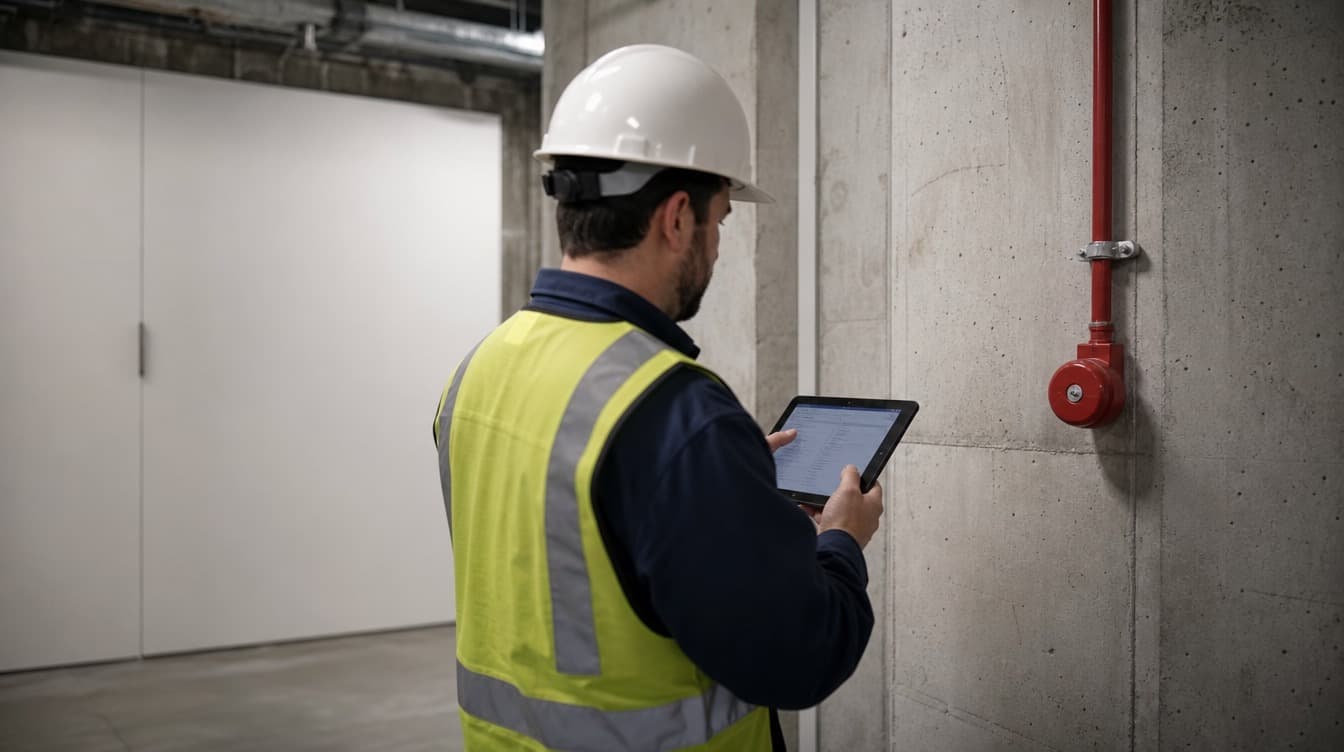
Digital Traceability in Fire Protection Documentation
December 28, 2025
We see how technology can transform passive fire protection from a collection of discreet on‑site tasks into a transparent, auditable and easily verifiable process.
How Technology Transforms Compliance and Verification Processes
In the wake of evolving UK fire‑safety regulations and increased scrutiny on responsible persons, “proving” compliance has become just as important as achieving it. Paper certificates, scattered emails and hand‑written site notes are no longer enough to satisfy Building Control, insurers or – critically – residents and end users.
This is where digital traceability in fire protection documentation comes into its own.
At DefendX Fire Protection, part of the DefendX Onsite Group, we see how technology can transform passive fire protection from a collection of discreet on‑site tasks into a transparent, auditable and easily verifiable process. In this article, we explore how digital tools are reshaping compliance for fire stopping, fire doors, fire boards, barriers and detection systems across modern construction.
What Do We Mean by Digital Traceability?
Digital traceability is the ability to track every fire protection activity – from survey and design through to installation, inspection and maintenance – using secure, digital records that are:
Time‑stamped and location‑specific
Linked to products, systems and drawings
Supported by photographs and documents
Easy to search, update and share
Instead of relying on static paper files, fire protection data is captured in real time, stored centrally and made accessible to those who need it: main contractors, duty‑holders, client teams, Building Control and, where appropriate, residents.
Why Digital Traceability Matters in Fire Protection
Modern projects are complex: multiple trades, tight programmes and constant design changes. Without digital systems, fire protection documentation quickly becomes fragmented and out of date.
Digital traceability directly supports:
Regulatory compliance – helping duty‑holders demonstrate they have taken all reasonable steps to manage fire risk.
The “golden thread” – providing a continuous record of fire‑safety information over the life of the building.
Defensibility – giving clients and contractors credible evidence in the event of audits, claims or investigations.
Efficiency – reducing duplication, rework and disputes about what has (or hasn’t) been done.
In short: digital traceability turns fire safety from assumption into evidence.
Key Elements of a Digitally Traceable Fire Protection Process
1. Location-Based Recording
Best‑practice systems track every fire protection activity by exact location:
Grid references or space IDs (e.g. riser numbers, cores, apartments, rooms)
Floor, zone and building references on multi‑block schemes
QR‑coded labels on site that link directly to digital records
For example, a fire‑stopped service penetration in Riser 3, Level 5 will have its own unique entry, including:
Substrate and services
Fire stopping system used
Install date, installer and sign‑off
Photos before and after installation
This eliminates ambiguity and makes future inspections or remedials far more efficient.
2. Photo-Rich Evidence
Photographic documentation is central to digital traceability. For each installation or remedial action, best‑practice records include:
“Before” photos showing the opening, substrate and services
“During” photos demonstrating application of the fire stopping or boarding system
“After” photos showing the finished detail and labelling
For fire doors, this may include close‑ups of:
Door leaf and frame
Hinges, closer, smoke/intumescent seals
Thresholds and frame‑to‑wall fire stopping
Photo evidence allows remote verification by project teams, fire engineers and quality inspectors – and it provides a clear audit trail long after ceilings are closed and risers are sealed.
3. Product & Certification Tracking
Digital systems can link each installation to:
Specific product types, batch numbers and manufacturers
Third‑party certification or test reports
Installation instructions and technical data sheets
This is particularly important for FIRAS‑style fire stopping systems, fire doors and fire board encasements, where the performance depends on using the correct components in the correct configuration.
If a product is later withdrawn, superseded or questioned, duty‑holders can instantly see where it was used and what remedial strategy is required.
4. Integrated Workflows: Survey → Install → Inspect → Certify
Technology allows the entire fire protection workflow to be captured in one place:
Survey and scoping – recording defects, proposed solutions and priorities.
Installation – logging completed works with photos, products and operatives.
Inspection and QA – independent checks and sign‑offs recorded against each item.
Certification and handover – generating structured reports for Building Control and the client team.
Because each step is time‑stamped and user‑specific, responsibility is clear and changes can be tracked over time.
5. Live Dashboards and Reporting
For main contractors, asset owners and FM providers, digital platforms can offer:
Live dashboards of progress (e.g. number of firestops completed vs outstanding).
Heat maps of high‑risk or non‑compliant areas.
Exportable reports for Building Control, insurers and internal governance.
Rather than chasing paper, project and safety teams can see – at a glance – whether the building’s passive fire protection is on schedule and on spec.
Digital Traceability Across Key Fire Protection Disciplines
Fire Stopping & Compartmentation
For fire stopping contractors, digital traceability ensures:
Every penetration is logged, treated and certified.
Compartment lines are fully evidenced, not just assumed.
Future service alterations can be traced back to original installations.
This dramatically reduces the risk of “unknown” firestops undermining the fire strategy.
Fire Doors
For fire door installation, inspection and maintenance, digital systems can:
Record door set types, ratings and locations.
Capture inspection results and remediation history for each door.
Provide reminders for re‑inspection intervals and maintenance actions.
In multi‑occupancy residential buildings, this is increasingly critical for demonstrating ongoing compliance.
Fire Boards & Structural Encasements
For structural protection, digital traceability enables:
Clear identification of all encased beams, columns and junctions.
Evidence of board thickness, fixing patterns and tested systems used.
Efficient planning of future intrusive inspections or modifications.
This is particularly valuable on complex commercial, industrial and residential structures with extensive steel frames.
Fire Detection & Alarm Systems
While this article focuses on passive fire protection, the same principles apply to fire detection and alarm systems:
Documented device locations and zoning.
Event logs, commissioning records and maintenance history.
Integration with digital monitoring and remote diagnostics.
Together, active and passive systems form a digitally traceable “safety net” for the building.
Benefits for Contractors, Clients and Duty-Holders
Implementing digital traceability in fire protection delivers clear, practical advantages:
For main contractors – clearer QA, fewer disputes, smoother Building Control sign‑off and reduced remedial risk at PC.
For developers and asset owners – a defensible compliance position and a strong evidence base for insurers and investors.
For facilities managers and housing providers – simplified maintenance planning and the ability to manage fire safety across portfolios.
For residents and end users – increased transparency and confidence that fire protection measures are real, not just promised.
In an era of heightened accountability, digital traceability is quickly moving from “value‑add” to “expected standard”.
How DefendX Fire Protection Uses Digital Traceability
At DefendX Fire Protection, we embed digital traceability into our core service delivery across:
Fire stopping & passive fire protection
Fire door installation, inspection and maintenance
Fire boards and structural encasements
Fire curtains and barriers
Fire detection and alarm systems
Our approach typically includes:
Location‑based digital logs for every install
Photo‑rich evidence before, during and after works
Product and certification references linked to each item
Clear sign‑off trails and structured handover packs
This ensures our clients receive more than just a completed installation – they receive a comprehensive digital record that supports compliance for the life of the building.
Conclusion
Digital traceability in fire protection documentation is reshaping how the UK construction and property sectors approach compliance, verification and long‑term risk management. By moving from paper‑based, fragmented records to centralised, photo‑rich digital systems, duty‑holders can:
Demonstrate compliance with confidence
Manage defects and remedials more effectively
Support the golden thread of building safety information
Protect lives, assets and reputations over the full building lifecycle
For construction projects and property portfolios where fire safety and documentation must stand up to scrutiny, partnering with a compliance‑led, digitally enabled passive fire protection contractor is essential.
DefendX Fire Protection – Protecting What You Build with certified installations, integrated passive fire protection and digital traceability that makes compliance clear, robust and provable.