
Advanced Fire Stopping Techniques
December 28, 2025
We specialise in passive fire protection for demanding environments across commercial, industrial and residential sectors.
Innovative Approaches to Comprehensive Building Protection
As building designs become more complex and services more congested, traditional “seal and forget” approaches to fire stopping are no longer enough. Modern projects demand advanced fire stopping techniques that can cope with large openings, mixed services, modular construction and tight programmes – all without compromising compliance.
At DefendX Fire Protection, we specialise in passive fire protection for demanding environments across commercial, industrial and residential sectors. Here are the innovative methods and best practices we use to deliver comprehensive building protection.
1. Engineered Fire Stopping Solutions for Complex Penetrations
On many projects, standard “small hole” details don’t match reality. You’ll see:
- Multi‑service bundles in shared openings
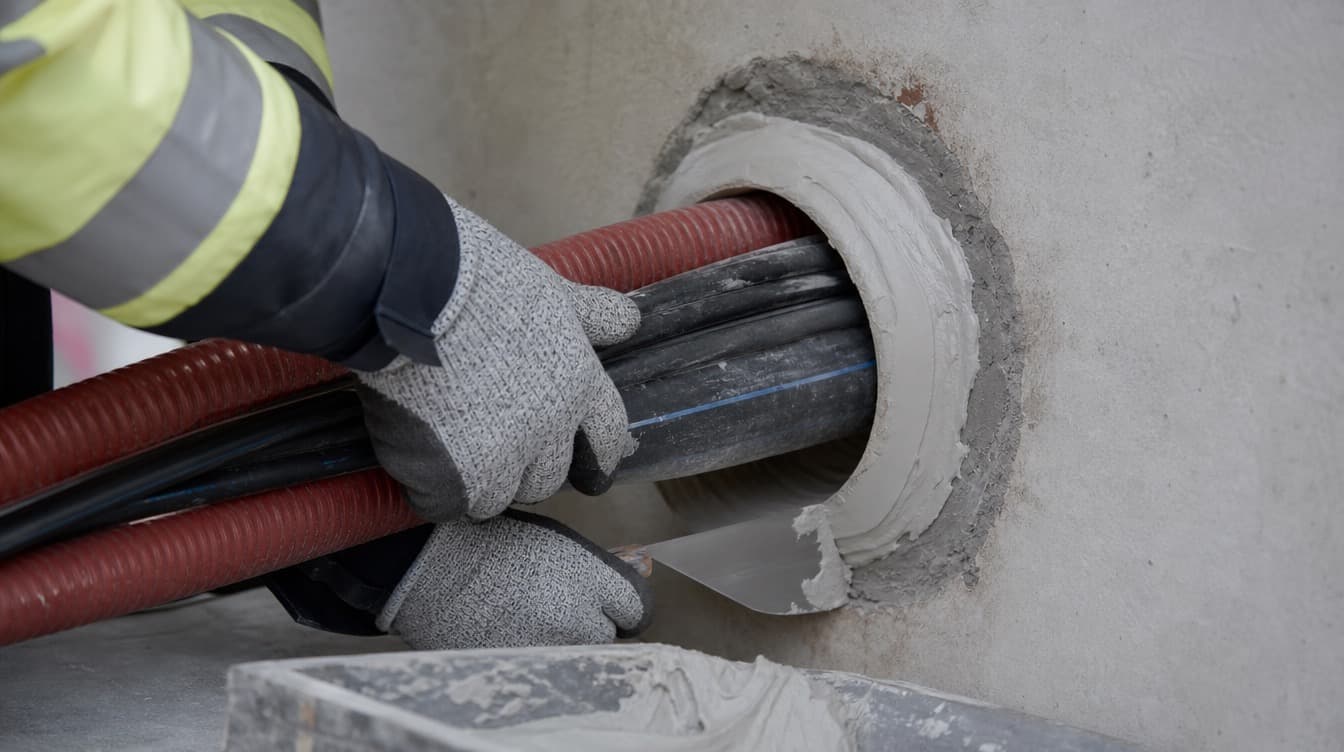
- Large, irregular apertures in concrete or blockwork
- Mixed combustible and non‑combustible services side by side
Advanced fire stopping means moving beyond generic mastic seals and adopting engineered systems:
- Multi‑service wraps and collars designed to handle plastic pipes, cable bundles and steel conduits together.
- Fire‑rated boards and batts with intumescent coatings, allowing large openings to be closed in a controlled, test‑backed way.
- Pre‑formed modular penetration seals for data centres and plant rooms, where re‑entry and future cable additions are expected.
These solutions are supported by tested configurations, giving you confidence that complex penetrations remain compliant.
2. Prefabricated & Modular Fire Stopping
With modern construction methods such as off‑site manufacturing and modular builds, fire stopping must adapt.
Innovative practices include:
- Factory‑installed fire collars and sleeves in pre‑cast walls and floor cassettes, reducing site work and improving consistency.
- Pre‑built service modules (riser frames, plant skids) where fire stopping interfaces are designed, tested and documented in advance.
- Standardised detail libraries that link modular assemblies with on‑site fire stopping requirements, reducing guesswork.
This approach speeds up installation on site while maintaining a high level of control over fire performance.
3. Advanced Sealing at Structural Interfaces
Structural frames and fire compartments often interact in complex ways – especially in transfer structures, podium slabs and mixed‑use developments.
Advanced techniques include:
- Fire board encasements around steel beams and columns that are integrated with adjacent walls and slabs to maintain a continuous fire line.
- Movement‑tolerant seals at slab edges and structural joints, designed to accommodate building movement without cracking or losing integrity.
- Fire‑rated joint systems in long linear gaps (e.g. between cores and floor plates) where simple mastic joints are not enough.
By treating structural protections and fire stopping as parts of one system, you protect both load‑bearing performance and compartmentation.
4. Smoke-Tight and Acoustic-Integrated Fire Stopping
In many modern buildings – especially residential and healthcare – performance requirements go beyond fire resistance.
Innovative fire stopping considers:
- Smoke control – using systems tested for leakage and incorporating cold‑smoke seals where escape routes must be protected.
- Acoustic performance – selecting fire stopping products that contribute to, rather than undermine, airborne and impact sound ratings between spaces.
- Air‑tightness and energy performance – ensuring that details help meet air‑test targets, not just fire regulations.
The result is multi‑functional details that support building performance on several fronts.
5. Fire Stopping for High-Risk & Industrial Environments
Industrial and high‑hazard facilities require tailored solutions:
- High‑temperature and chemical‑resistant systems for process plants and manufacturing lines.
- Explosion‑relief compatible details, ensuring fire stopping doesn’t interfere with designed venting mechanisms.
- Specialist solutions for dust‑laden or humid environments, where traditional materials may degrade.
Here, innovation comes from combining tested products with a deep understanding of the operational risk.
6. Digital-Enabled Fire Stopping
True “advanced” fire stopping is as much about process as product.
Leading contractors now:
- Use digital tools to map penetrations, log installations and generate photo‑rich records.
- Apply QR codes or labels to key locations so that future teams can access historical information instantly.
- Integrate fire stopping data with BIM and asset management systems, supporting the golden thread.
This transforms fire stopping from a hidden, one‑off task into a managed, traceable part of the building lifecycle.
7. Integrated Working with Other Trades
Innovative fire stopping is collaborative:
- Early coordination with M&E designers minimises awkward penetrations and over‑sized openings.
- Joint planning with dryliners, structural steel and façade teams ensures interfaces are fully detailed, not patched later.
- Clear interface responsibilities stop high‑risk gaps forming between packages.
Where necessary, DefendX Fire Protection works directly with design teams to develop and document bespoke details before work starts.
Choosing the Right Partner for Advanced Fire Stopping
For main contractors and developers, the risk profile around fire stopping is too high to rely on ad‑hoc solutions. You need a specialist passive fire protection contractor able to:
- Interpret fire strategies and develop practical, tested details
- Deliver complex installations in live construction environments
- Provide digital, photo‑rich evidence for every penetration and junction
That’s exactly what DefendX Fire Protection provides – helping you achieve comprehensive building protection that stands up to technical, regulatory and commercial scrutiny.
Protecting What You Build means more than sealing holes. It means adopting advanced, integrated fire stopping techniques that keep your projects safe, compliant and defensible for years to come.